Pakistan has officially emerged as the first international customer for China’s J-35 fifth-generation stealth fighter, marking a major milestone in defense cooperation between Islamabad and Beijing and signaling a significant leap in the modernization of the Pakistan Air Force (PAF).
The acquisition positions Pakistan among a select group of nations operating stealth combat aircraft and is expected to substantially enhance the country’s air combat capabilities amid a rapidly evolving regional security environment.
A Historic Export Breakthrough for China
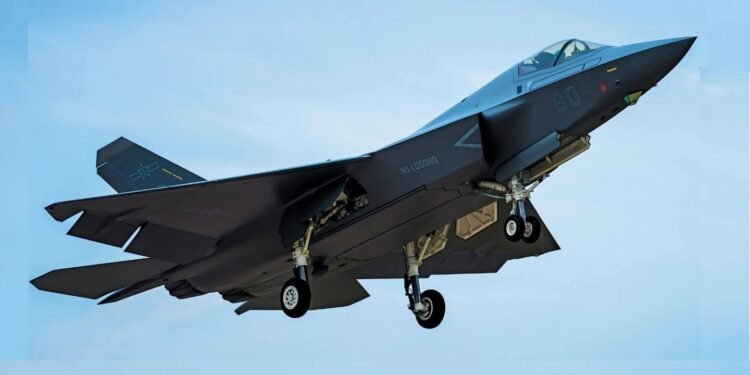
The J-35 represents China’s latest effort to enter the global market for advanced stealth fighters. Developed by the Shenyang Aircraft Corporation, the aircraft is designed as a twin-engine, multi-role fighter capable of conducting air superiority, strike, suppression of enemy air defenses, and intelligence-gathering missions while maintaining a low radar signature.
Pakistan’s decision to procure the aircraft makes it the first foreign operator of the platform and highlights the growing maturity of China’s aerospace industry, which is increasingly competing in segments traditionally dominated by Western and Russian manufacturers. Defense analysts view the export as a landmark achievement for China’s military aviation sector, demonstrating confidence in the aircraft’s capabilities and export potential.
Boosting Pakistan’s Air Combat Capabilities
The arrival of the J-35 is expected to provide the Pakistan Air Force with a substantial technological advantage compared to previous generations of fighter aircraft.
Unlike conventional fourth-generation fighters, stealth aircraft are designed to reduce their radar cross-section, making them significantly harder to detect and engage. Combined with advanced sensors, data fusion systems, electronic warfare capabilities, and long-range air-to-air missiles, the aircraft is expected to strengthen Pakistan’s ability to operate in contested airspace.
The fighter is widely believed to be capable of carrying advanced Chinese weapons internally, preserving its low-observable characteristics while maintaining significant combat capability. Industry observers expect the aircraft to be integrated with next-generation air-to-air missiles, including the PL-15 and potentially newer long-range weapons currently entering Chinese service.
Strengthening Pakistan-China Defense Cooperation
The J-35 acquisition reflects the deepening strategic partnership between Pakistan and China, which has already produced several major defense programs.
The two countries previously collaborated on the successful JF-17 Thunder fighter program, which became the backbone of Pakistan’s combat aviation fleet. The addition of the J-35 would significantly expand the technological scope of that relationship, bringing fifth-generation capabilities into Pakistan’s inventory for the first time.
Military cooperation between the two nations has steadily grown over the past two decades, encompassing fighter aircraft, naval vessels, air-defense systems, drones, and advanced missile technologies.
Regional Implications
The introduction of a stealth fighter into Pakistan’s air force is likely to attract close attention across South Asia and beyond.
Modern air warfare increasingly emphasizes stealth, networked operations, sensor fusion, and long-range precision engagement. The addition of the J-35 could enhance Pakistan’s ability to conduct beyond-visual-range engagements, penetrate defended airspace, and operate as part of an integrated network of airborne and ground-based assets.
Analysts note that the aircraft’s effectiveness will depend not only on its stealth characteristics but also on the supporting ecosystem of sensors, airborne early warning aircraft, electronic warfare platforms, datalinks, and pilot training.
What We Know About the J-35
Although official performance figures remain limited, open-source assessments suggest the aircraft incorporates several advanced features, including:
- Low-observable stealth design.
- Twin-engine configuration.
- Advanced AESA radar.
- Sensor fusion and network-centric warfare capabilities.
- Internal weapons bays.
- Modern electronic warfare systems.
- Compatibility with long-range air-to-air missiles.
- Multi-role mission capability covering both air-to-air and air-to-ground operations.
The fighter is often viewed as China’s answer to the growing global demand for fifth-generation combat aircraft and may eventually become one of the most important export products in Beijing’s defense portfolio.
Looking Ahead
The induction of the J-35 would represent one of the most significant upgrades in Pakistan Air Force history. As regional air forces continue to modernize, the introduction of stealth technology, advanced sensors, and next-generation weapons is expected to reshape the balance of air combat capability in the region.
While details regarding delivery schedules, fleet size, training programs, and operational deployment remain limited, Pakistan’s selection of the J-35 signals a clear commitment to maintaining a technologically advanced air force capable of meeting future challenges.
For China, the deal represents the first international success story for its newest stealth fighter. For Pakistan, it marks the beginning of a new era in combat aviation and a major step toward fifth-generation airpower.