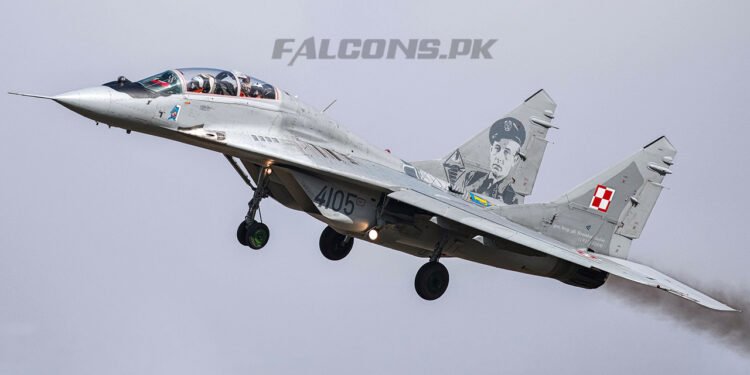
Poland has temporarily halted plans to transfer its remaining MiG-29 fighter jets to Ukraine, with senior officials citing unresolved disagreements over the sharing of Ukrainian drone technology as the key obstacle.
According to Polish Defence Minister Władysław Kosiniak-Kamysz and Deputy Defence Minister Cezary Tomczyk, Warsaw had proposed a reciprocal arrangement in which Poland would provide its remaining Soviet-era MiG-29 fighters while Ukraine would share expertise and selected technologies developed through its extensive wartime experience in unmanned aerial systems.
Drone Technology at the Center of Dispute
Polish officials say the agreement was intended to go beyond a simple aircraft transfer, describing it as a broader defense partnership focused on strengthening Poland’s rapidly expanding drone capabilities.
However, Warsaw now claims that Kyiv has not fulfilled the technology-sharing commitments that were expected to accompany the fighter transfer. As a result, Poland has decided not to proceed with handing over its remaining MiG-29 fleet until the issue is resolved.
Speaking to local media, Kosiniak-Kamysz said Poland had sought a “partner-based approach” in which both countries would benefit from closer defense-industrial cooperation rather than a one-sided military donation.
Poland Still Open to Future Delivery
Despite the current pause, Polish officials stressed that the MiG-29 transfer has not been permanently cancelled.
Deputy Defence Minister Cezary Tomczyk said negotiations remain ongoing and that the fighter transfer could move forward once the outstanding issues surrounding drone cooperation are settled. He emphasized that Poland remains committed to supporting Ukraine but expects agreed reciprocal arrangements to be honored.
Additional Challenges
Another factor complicating the transfer is the condition of Poland’s remaining MiG-29 fleet. Officials have indicated that Ukraine would prefer upgraded aircraft suitable for modern combat operations, while Warsaw has made clear it is unwilling to finance costly modernization work before any handover.
Strategic Implications
The delay highlights the evolving nature of military assistance to Ukraine. As the conflict continues, advanced technologies—particularly drone systems, electronic warfare capabilities, and battlefield know-how—have become increasingly valuable bargaining assets alongside conventional weapons.
For Poland, which has emerged as one of Ukraine’s strongest military supporters since 2022, the pause reflects a growing emphasis on mutual defense-industrial cooperation rather than unconditional equipment transfers. While the MiG-29 deal remains on hold, officials from both countries continue discussions aimed at reaching an agreement that satisfies the interests of both sides.