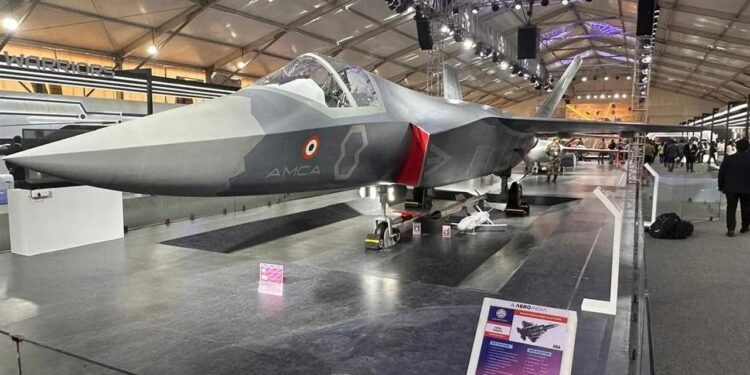
India’s ambitious effort to develop its first indigenous fifth-generation stealth fighter has encountered a major challenge, with reports indicating that negotiations over the engine for the Advanced Medium Combat Aircraft (AMCA) have stalled due to a significant pricing dispute involving American aerospace giant GE Aerospace.
According to emerging reports, GE’s proposal for supplying and supporting the powerplant selected for the AMCA program is substantially higher than Indian expectations, with the company reportedly seeking nearly three times the originally anticipated cost. The disagreement has raised concerns about the future timeline, affordability, and strategic direction of India’s flagship stealth fighter project.
The AMCA is intended to become the centerpiece of the Indian Air Force’s future combat aviation fleet. Designed as a twin-engine, fifth-generation fighter featuring stealth characteristics, advanced avionics, internal weapons bays, and network-centric warfare capabilities, the aircraft is expected to complement and eventually succeed portions of India’s current frontline fighter inventory.
Engine selection has long been viewed as one of the most critical and challenging aspects of the AMCA program. While India has made progress in indigenous aerospace development, the country continues to rely on foreign partners for high-performance military jet engines. The AMCA’s planned powerplant is expected to provide the thrust, reliability, and performance necessary to meet the demanding requirements of a modern stealth fighter.
Reports suggest that the latest round of negotiations has exposed significant differences between the two sides regarding cost, technology transfer, intellectual property rights, and long-term production arrangements. Indian officials are said to be evaluating multiple options to ensure that the program remains financially sustainable while meeting operational requirements.
The dispute highlights a broader challenge facing India’s defense modernization efforts. Advanced combat aircraft programs are among the most expensive and technologically demanding military projects in the world. Engine development alone can account for a substantial portion of a fighter aircraft’s overall research, development, and production costs.
Industry analysts note that delays in resolving the engine issue could affect the AMCA’s development schedule. The fighter’s first prototype is expected to enter testing later this decade, making timely decisions on propulsion systems increasingly important for maintaining program momentum.
The situation may also encourage India to explore alternative partnerships or accelerate efforts to develop a more capable indigenous engine. Over the years, New Delhi has pursued greater self-reliance in defense manufacturing under its “Atmanirbhar Bharat” initiative, seeking to reduce dependence on foreign suppliers for critical military technologies.
Despite the reported impasse, defense observers believe negotiations between India and GE are likely to continue. Both sides have significant strategic and industrial interests in reaching an agreement, particularly given the growing defense cooperation between India and the United States in recent years.
For the Indian Air Force, the outcome of the engine negotiations will be closely watched. The AMCA is expected to play a crucial role in maintaining India’s future air combat capabilities amid rapid advancements in military aviation across the region. Any prolonged delay in engine procurement could have implications for the aircraft’s development timeline and eventual induction into service.
As discussions continue, the engine question remains one of the most important factors shaping the future of India’s next-generation stealth fighter program. Whether through an agreement with GE, a revised partnership structure, or an alternative solution, the resolution of this issue will significantly influence the AMCA’s path from concept to operational reality.