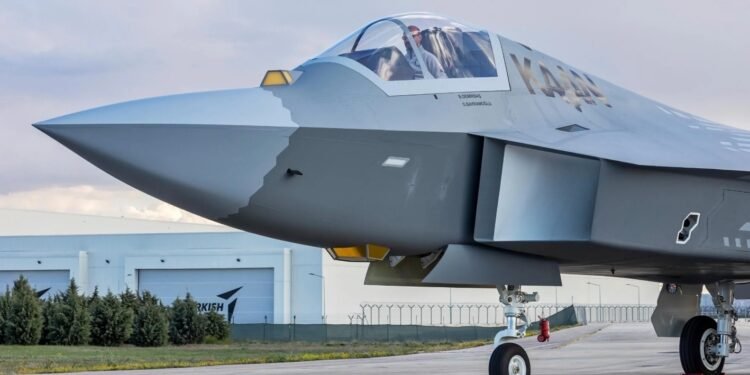
The United States has formally notified Congress of a proposed $700 million Foreign Military Sale (FMS) to Türkiye involving engines and related equipment for the country’s indigenous KAAN fifth-generation fighter program, marking another significant milestone in Ankara’s effort to develop an advanced domestically produced combat aircraft.
The proposed sale, announced through the U.S. Defense Security Cooperation Agency (DSCA), includes the supply of F110-GE-129 turbofan engines manufactured by GE Aerospace, along with spare engines, engine accessories, technical support, logistics, and associated equipment. The package is intended to support the continued development, testing, and eventual production of the Turkish Aerospace Industries (TAI) KAAN fighter.
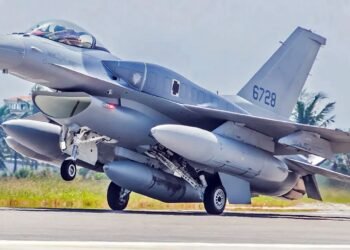
The notification represents a major step for the KAAN program, which aims to provide the Turkish Air Force with a next-generation stealth fighter capable of replacing the aging F-16 fleet over the coming decades. Although Congress must still review the proposed sale, such notifications are a standard part of the U.S. Foreign Military Sales process.
Supporting Türkiye’s Indigenous Fighter Ambitions
Türkiye has been pursuing the KAAN program as the centerpiece of its long-term defense modernization strategy following its removal from the multinational F-35 Joint Strike Fighter program in 2019. Since then, Ankara has accelerated investment in indigenous defense technologies, including combat aircraft, unmanned aerial systems, missiles, avionics, and electronic warfare capabilities.
The twin-engine KAAN completed its maiden flight in February 2024 and continues to progress through an extensive flight-testing campaign. Turkish officials have outlined plans for the aircraft to enter service during the 2030s following prototype testing and certification.
The proposed engine sale is expected to support early production aircraft and additional flight-test prototypes while Türkiye continues efforts to develop a domestically produced turbofan engine for future variants.
F110 Engines Already Power the Prototype
The KAAN prototype currently flies with two F110-GE-129 afterburning turbofan engines, the same engine family that powers several variants of the F-16 Fighting Falcon. Producing approximately 29,000 pounds of thrust each with afterburner, the F110 offers proven performance and reliability during the aircraft’s development phase.
Turkish officials have consistently stated that while imported engines will support the initial batches of KAAN fighters, the long-term objective remains equipping later production aircraft with an indigenous powerplant currently under development.
Strengthening U.S.-Türkiye Defense Cooperation
The proposed engine sale reflects continuing defense cooperation between Washington and Ankara despite years of political and strategic disagreements over several regional issues. In recent years, bilateral defense ties have shown signs of improvement, including U.S. approval of Türkiye’s F-16 Block 70 modernization package and ongoing discussions surrounding defense industrial cooperation.
Officials believe the engine sale will strengthen NATO interoperability while supporting a key ally’s modernization efforts. At the same time, the agreement demonstrates the strategic importance of maintaining industrial collaboration between American defense manufacturers and allied aerospace programs.
KAAN’s Future Development
The KAAN is designed as a fifth-generation multirole fighter incorporating low-observable characteristics, advanced sensor fusion, network-centric warfare capabilities, internal weapons bays, and modern avionics. Turkish Aerospace Industries envisions the aircraft serving as the backbone of the Turkish Air Force well into the second half of the century.
Beyond domestic requirements, Ankara also hopes to position the KAAN as a competitive export platform for friendly nations seeking an advanced combat aircraft outside existing Western and Russian fighter programs.
Although significant development work remains, including continued flight testing, systems integration, and eventual integration of an indigenous engine, the proposed U.S. engine sale removes an important uncertainty for the program’s near-term development.
If approved, the package would help ensure that prototype testing and early production activities continue on schedule while Türkiye advances toward fielding its first domestically developed fifth-generation fighter.