India is reportedly engaged in discussions with the United Arab Emirates over a potential sale of the BrahMos supersonic cruise missile, a move that could further expand New Delhi’s defense-export footprint in the Middle East and strengthen strategic ties with one of the region’s most influential military powers.
According to sources familiar with the matter, negotiations between Indian and Emirati officials are progressing as both countries explore opportunities for deeper defense cooperation. While no formal agreement has been announced, the discussions highlight growing international interest in the BrahMos missile system, which is widely regarded as one of the world’s fastest operational supersonic cruise missiles.
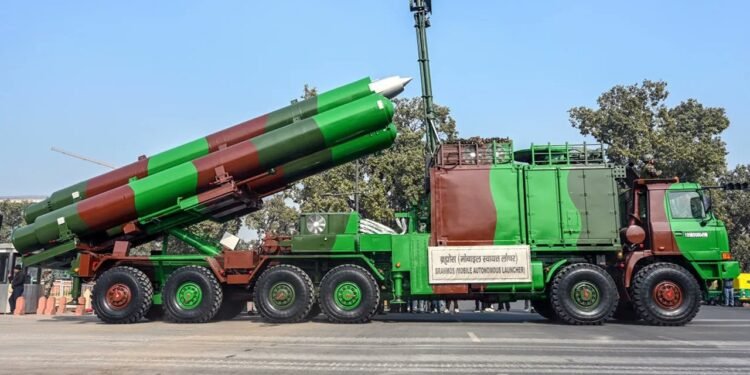
The BrahMos, jointly developed by India and Russia, is capable of engaging both land and maritime targets at high speed and is currently deployed across the Indian Army, Navy, and Air Force. Over the years, the missile has undergone several upgrades, improving its range, accuracy, and operational flexibility.
A potential sale to the UAE would represent another significant milestone for India’s defense industry, which has increasingly focused on boosting exports as part of its broader effort to become a major global supplier of military equipment. New Delhi has already secured export success with the BrahMos, most notably through its agreement with the Philippines, which became the first foreign operator of the missile system.
Defense analysts believe the UAE’s interest is driven by the missile’s combination of speed, precision, and versatility. Capable of flying at speeds approaching Mach 3, the BrahMos significantly reduces an adversary’s reaction time and can be launched from multiple platforms, including ships, coastal batteries, aircraft, and potentially ground-based mobile launchers.
For the UAE, acquisition of a supersonic missile system could enhance coastal defense capabilities, maritime security, and long-range precision strike options in a region where naval competition and strategic chokepoints remain critical security considerations.
The reported talks also reflect the rapidly expanding strategic relationship between India and the UAE. In recent years, both countries have deepened cooperation across defense, trade, technology, and energy sectors. Military exercises, intelligence sharing, and defense-industrial collaboration have become increasingly prominent features of the bilateral partnership.
However, any export agreement would likely require careful consideration of technical, financial, and geopolitical factors. Because the BrahMos program involves Russian technology, certain export arrangements may require coordination among multiple stakeholders. Additionally, regional security dynamics and international defense regulations could influence the pace and scope of any eventual deal.
If finalized, the agreement would further elevate India’s standing in the global missile export market and reinforce its ambition to transform from a major arms importer into a significant defense exporter. For the UAE, the acquisition would provide access to one of the most capable supersonic missile systems currently available for export.
Although negotiations remain ongoing and neither government has publicly confirmed a final agreement, the reported discussions signal growing confidence in India’s indigenous defense manufacturing sector and the increasing international appeal of the BrahMos missile family.