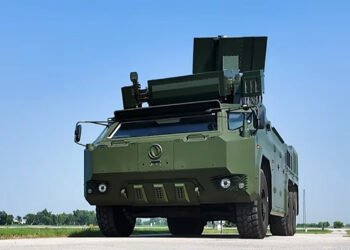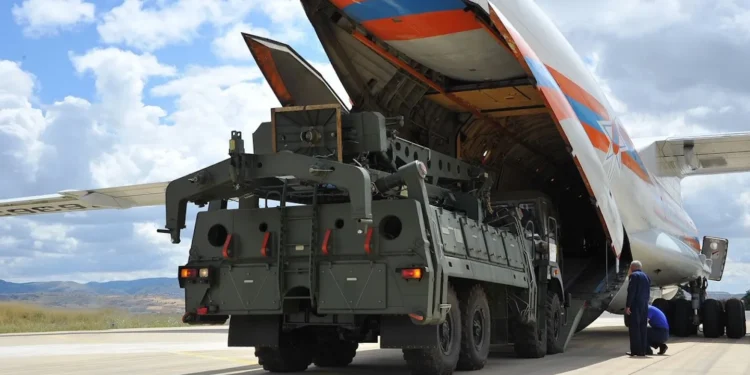
Türkiye is reportedly exploring the possibility of transferring its Russian-made S-400 Triumf air defense system to a Gulf country in a move that analysts believe could help ease tensions with the United States and potentially reopen discussions over Ankara’s return to the F-35 Lightning II fighter program.
According to multiple media reports, Turkish officials are evaluating options that could resolve the long-running dispute over the S-400 system, which led to Türkiye’s removal from the multinational F-35 program in 2019. While no official agreement has been announced, the reported proposal has fueled speculation that Ankara is seeking a compromise that preserves its strategic interests while rebuilding defense ties with Washington.
The United States has consistently argued that operating the Russian S-400 alongside the stealthy F-35 poses unacceptable security risks. U.S. officials have maintained that the advanced radar and sensor capabilities of the S-400 could potentially collect sensitive data on the F-35’s stealth characteristics, prompting Washington to suspend Türkiye’s participation in the program and impose sanctions under the Countering America’s Adversaries Through Sanctions Act (CAATSA).
Türkiye, however, has repeatedly defended its decision to purchase the S-400, stating that the acquisition was driven by urgent national air defense requirements after unsuccessful attempts to procure comparable Western systems on acceptable terms. Ankara has also emphasized that the S-400 has not been integrated into NATO’s air defense architecture.
Reports suggesting that Türkiye may transfer the S-400 to a Gulf nation have not been officially confirmed by either the Turkish government or the United States. Likewise, no Gulf country has publicly acknowledged negotiations for acquiring the system.
Defense analysts note that if such a transfer were to occur, it could remove one of the principal obstacles preventing renewed cooperation between Ankara and Washington on advanced defense projects. Nevertheless, they caution that Türkiye’s re-entry into the F-35 program would likely require broader political and legal agreements extending beyond the status of the S-400 alone.
In recent years, relations between the two NATO allies have shown signs of improvement. The U.S. approved the sale of new F-16 Block 70 fighter aircraft and modernization kits to Türkiye, reflecting a gradual easing of defense tensions. Even so, Washington has not announced any policy change regarding Türkiye’s exclusion from the F-35 program.