China has claimed that its J-10C fighter aircraft achieved a decisive 9–0 victory against one of Europe’s most advanced combat jets, reportedly the Eurofighter Typhoon, during a simulated air combat exercise, sparking widespread discussion in military aviation circles.
According to reports circulating in Chinese defense commentary and state-affiliated media discussions, the exercise involved multiple beyond-visual-range and within-visual-range engagements between J-10C fighters and Eurofighter Typhoons. Chinese sources claim that the J-10C fleet secured a clean sweep with a 9–0 scoreline, though no official independent verification or detailed exercise data has been released.
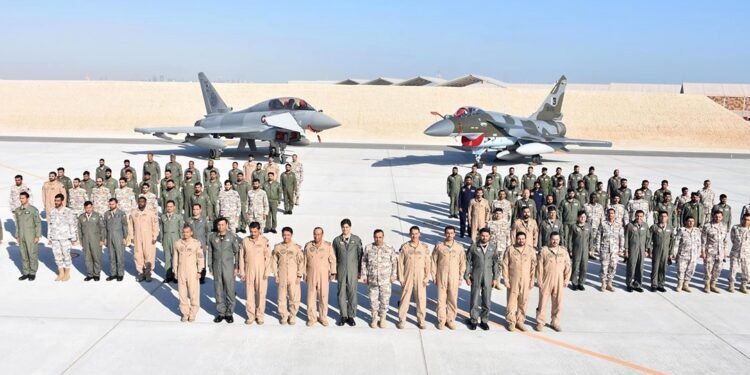
The Eurofighter Typhoon is widely regarded as one of Europe’s most capable multirole fighters, operated by several NATO air forces including the United Kingdom, Germany, Italy, and Spain. It is equipped with advanced avionics, powerful twin engines, and modern radar and weapons systems, making it a benchmark platform in Western airpower assessments.
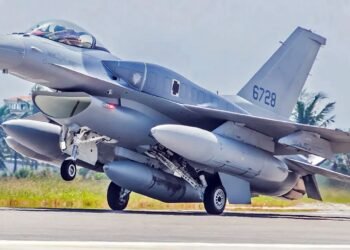
The J-10C, meanwhile, represents the most advanced operational variant of China’s J-10 fighter family. It features an active electronically scanned array (AESA) radar, upgraded electronic warfare systems, modernized avionics, and compatibility with long-range air-to-air missiles. It is considered a key component of China’s fourth-plus-generation fighter fleet and is increasingly central to the modernization of the People’s Liberation Army Air Force (PLAAF).
Analysts note that simulated air combat results are highly dependent on exercise conditions, rules of engagement, and training objectives. Outcomes can vary significantly based on scenario design, pilot experience, electronic warfare support, data-link integration, and the presence of airborne early warning aircraft.
In many modern exercises, “kill ratios” are not direct indicators of real-world combat superiority but rather reflect performance under controlled conditions. Factors such as starting positions, detection ranges, missile employment rules, and support assets can significantly influence results.
Despite these caveats, the reported claim has drawn attention because of the symbolic competition between Chinese and European air combat platforms. The Eurofighter Typhoon is often benchmarked against other advanced fighters such as the Rafale, F-15 variants, and F/A-18E/F, while the J-10C is increasingly being positioned as one of China’s most capable indigenous fighters.
Military aviation experts caution against drawing definitive conclusions from unverified exercise outcomes. Air combat effectiveness depends on a complex combination of technology, pilot skill, networked warfare systems, and mission context rather than isolated exercise scores.
However, the claim reflects China’s growing emphasis on showcasing the capabilities of its modernized air force, particularly as it continues to develop advanced platforms such as the J-20 stealth fighter and next-generation support systems.
Whether or not the reported 9–0 outcome accurately reflects comparative performance, the narrative underscores the increasing strategic competition in modern airpower and the importance of advanced sensors, missiles, and electronic warfare in shaping future aerial combat.
Until independent details emerge, the reported exercise should be viewed as an unverified claim within the context of controlled training scenarios rather than definitive evidence of operational superiority.