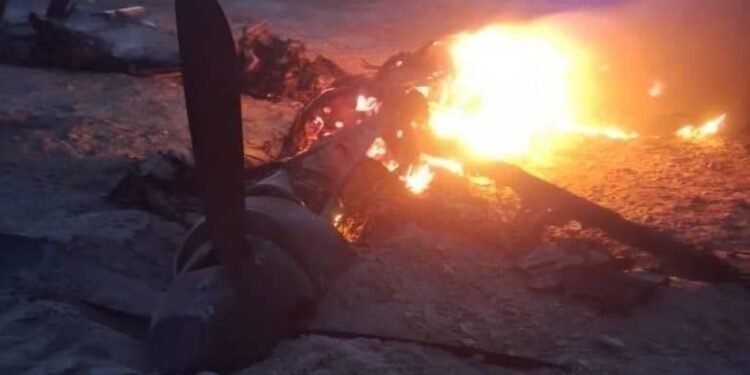
Iran has claimed that its air defense forces shot down multiple U.S. MQ-9 Reaper drones over the southern province of Bushehr, in what Tehran described as a response to alleged violations of its airspace amid heightened regional tensions.
According to Iran’s Islamic Revolutionary Guard Corps (IRGC) and state media outlets, the drones were intercepted near the city of Khormoj after entering the province’s airspace. Iranian officials stated that the aircraft were engaged by the country’s integrated air defense network and successfully destroyed, describing the operation as evidence of Iran’s readiness to counter foreign aerial surveillance and reconnaissance missions.
The reported incident comes at a time of escalating military friction between Iran and the United States, with both sides accusing each other of provocative actions in and around the Persian Gulf and the Strait of Hormuz. Iranian authorities said the drones were conducting intelligence-gathering missions near sensitive military and strategic infrastructure in Bushehr Province, home to key energy facilities and military installations.
As of publication, U.S. officials have not confirmed Iran’s claim, nor has the U.S. Department of Defense acknowledged the loss of any MQ-9 Reaper drones. Independent verification of the reported shootdowns has also not been made public.
The MQ-9 Reaper, manufactured by General Atomics Aeronautical Systems, is one of the U.S. military’s primary intelligence, surveillance, reconnaissance (ISR), and precision-strike unmanned aircraft. With an endurance exceeding 24 hours and the ability to carry advanced sensors and precision-guided weapons, the platform has been widely employed in operations across the Middle East.
If confirmed, the reported shootdown would mark another significant episode in the ongoing confrontation between Washington and Tehran. It would also underscore the growing capability of modern integrated air defense systems to challenge high-end unmanned aerial platforms operating in contested airspace.
Defense analysts note that the incident, if verified, could influence future U.S. reconnaissance operations over the Gulf while highlighting the increasing importance of electronic warfare, long-range surveillance, and layered air defense systems in modern military strategy.
The situation remains fluid, and further details are expected as both sides continue to monitor developments in one of the world’s most strategically sensitive regions.