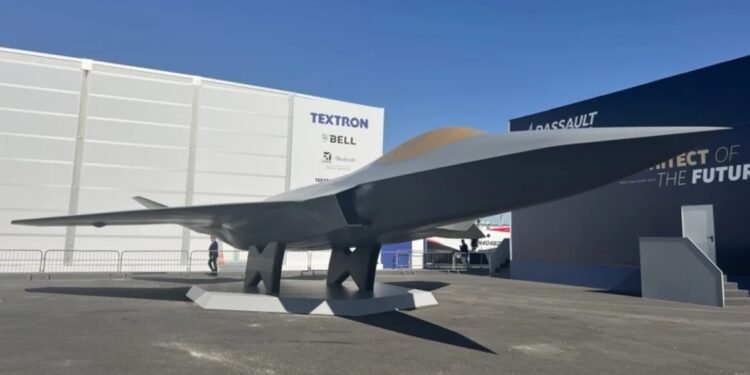
The ambitious Franco-German effort to develop a common sixth-generation combat aircraft under the Future Combat Air System (FCAS) program has effectively come to an end, marking a major setback for Europe’s long-standing vision of a unified next-generation fighter platform.
According to reports published on June 8, 2026, German Chancellor Friedrich Merz informed French President Emmanuel Macron that Germany would no longer participate in the joint development of the FCAS New Generation Fighter (NGF), the manned aircraft intended to serve as the centerpiece of the broader FCAS architecture.
The decision was reportedly communicated during discussions held on the sidelines of the EU-Western Balkans Summit in Montenegro on June 6, bringing years of industrial disagreements and conflicting national requirements to a decisive conclusion.
Combat Cloud Survives as Fighter Partnership Ends
While the jointly developed fighter aircraft has been abandoned, Germany and France are expected to continue collaborating on the FCAS “system of systems” concept. This portion of the project focuses on a digital combat cloud designed to connect crewed aircraft, drones, satellites, sensors, and command networks into a single integrated battlespace.
The future division of responsibilities for this component is expected to be discussed during the next Franco-German ministerial council meeting scheduled for July 2026.
Airbus and Dassault Deadlock Proves Impossible to Resolve
The collapse of the fighter project stems largely from a prolonged dispute between Airbus and Dassault Aviation over leadership and industrial control.
For years, both companies struggled to agree on how responsibilities would be shared. Dassault consistently maintained that, as France’s premier combat aircraft manufacturer, it should retain primary authority over fighter development. Airbus, backed by Berlin, sought an equal partnership arrangement. Attempts by political leaders to bridge the divide repeatedly failed.
Earlier in 2026, Chancellor Merz publicly questioned whether a single aircraft could realistically satisfy the operational requirements of both countries. France required a carrier-capable aircraft able to perform nuclear deterrence missions, while Germany had no comparable requirement.
A formal mediation effort launched following high-level discussions between Macron and Merz in Brussels ultimately broke down in April 2026. By then, mediators reportedly concluded that a jointly developed manned fighter was no longer achievable under the existing framework.
Diverging National Visions
The disagreement highlighted a deeper issue within the FCAS project: France and Germany increasingly envisioned different futures for their air forces.
France viewed the NGF as the successor to the Rafale and an essential component of its independent nuclear deterrent and naval aviation capabilities. Germany, meanwhile, prioritized industrial balance and sought a greater role for Airbus in shaping future combat aviation programs.
The dispute reached a point where neither side appeared willing to compromise on core requirements or industrial leadership. Germany’s new national aviation strategy, expected to be formally approved this week, reinforces Berlin’s position by stating that Airbus must hold a leading role in any future German combat aircraft development effort.
France and Germany Move Toward Separate Fighter Programs
With the FCAS fighter element terminated, both nations are expected to pursue independent paths.
Dassault Aviation is now expected to lead development of a French sixth-generation combat aircraft, supported by funding allocated through France’s defense modernization plans and the ongoing Rafale F5 program.
Germany, meanwhile, is expected to develop its own next-generation fighter initiative under Airbus leadership. Spain, the third FCAS partner, is widely expected to align with Berlin’s approach. Reports also indicate that Airbus has explored closer cooperation with Sweden’s Saab, which German officials reportedly view as a more flexible industrial partner for future aerospace projects.
Both future aircraft programs are expected to target operational service during the early 2040s.
Spain and Belgium Had Already Begun Looking Elsewhere
The growing uncertainty surrounding FCAS had already prompted concern among partner nations.
Spain had begun supporting alternative studies involving Airbus and Indra while also advancing domestic combat aviation initiatives. Belgium, which joined FCAS as an observer in 2024, became increasingly skeptical about the project’s future.
Following earlier comments from German officials questioning the viability of the fighter component, Belgian Defense Minister Theo Francken publicly declared the project effectively dead. Belgium later announced plans to acquire additional F-35A fighter aircraft, further signaling diminishing confidence in FCAS.
Implications for European Defense Cooperation
The collapse of the NGF component represents one of the most significant setbacks for European defense-industrial cooperation in recent years. Launched in 2017 by French President Emmanuel Macron and former German Chancellor Angela Merkel, FCAS was envisioned as Europe’s flagship sixth-generation combat aviation program and carried an estimated value approaching €100 billion.
The decision now raises broader questions about Europe’s ability to jointly develop major defense platforms and could also affect other collaborative projects, including the Main Ground Combat System (MGCS) future tank initiative.
For now, the combat cloud portion of FCAS survives, but Europe’s dream of a single Franco-German sixth-generation fighter has come to an end, with Paris and Berlin preparing to chart separate paths toward the next generation of air combat power.