ISLAMABAD: Serbian President Aleksandar Vučić has stated that Pakistan successfully employed Chinese-made CM-400AKG missiles against an Indian S-400 Triumf air defence system during the May 2025 India-Pakistan conflict.
Speaking on Serbian state television in March 2026, Vučić referenced the South Asian confrontation while discussing Serbia’s own acquisition of the CM-400AKG missile. According to his remarks, Chinese satellite imagery indicated damage to a radar component associated with an S-400 battery located at Adampur Air Base in Punjab, India.
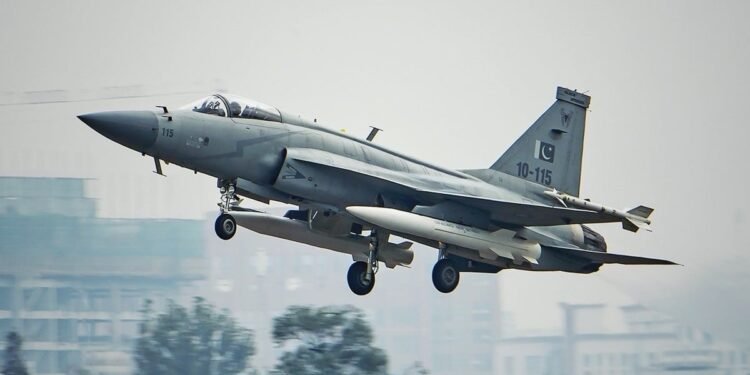
Pakistani military officials had previously claimed that JF-17 Thunder fighter aircraft launched CM-400AKG missiles in stand-off attacks against the Russian-made air defence system. According to those claims, the strikes targeted key radar elements and degraded the operational effectiveness of the battery during the four-day military escalation between the two nuclear-armed neighbors.
The CM-400AKG is a Chinese-developed supersonic air-launched missile designed for precision strikes against high-value targets. Depending on launch conditions and warhead configuration, the missile is reported to have a range between 200 and 400 kilometers. It carries either a high-explosive or penetrator warhead and is optimized for engaging critical infrastructure and air defence assets.
Vučić also highlighted Serbia’s experience with the missile system, noting that the country became the first European operator to integrate the CM-400AKG onto its MiG-29 fighter fleet. He described the missile as highly effective and confirmed plans for additional acquisitions.
Pakistani defence sources maintain that the May 2025 operation represented the first known combat use of the CM-400AKG. They further assert that anti-radiation variants of the missile were employed to home in on active radar emissions, enabling precision engagement of air defence components from stand-off distances.
Indian authorities, however, have consistently rejected the claims. New Delhi has maintained that no S-400 battery suffered significant damage during the conflict. Indian officials pointed to Prime Minister Narendra Modi’s visit to Adampur Air Base shortly after the reported strike as evidence that operational air defence systems remained functional. The Indian government has characterized Pakistani claims as misinformation.
Independent verification of the alleged strike remains limited. Due to restricted access to military sites and the absence of publicly available technical assessments, the full extent of any damage has not been conclusively established. Nevertheless, military analysts note that radar systems are among the most critical and vulnerable components of modern integrated air defence networks, making them priority targets in contemporary stand-off warfare.