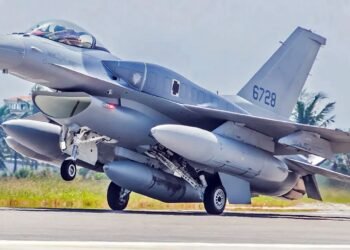
The United States Air Force has awarded a $488 million contract to defense giant Northrop Grumman for long-term engineering and technical support of F-16 Fighting Falcon radar systems, with Pakistan among the countries set to benefit from the program.
According to the contract announcement, the agreement focuses on sustaining and supporting the APG-66 and APG-68 radar systems used by F-16 operators worldwide. The contract is structured as an indefinite-delivery, indefinite-quantity arrangement and is expected to run through March 2036. Work will be carried out primarily at Northrop Grumman’s facilities in Maryland.
Pakistan is one of more than twenty nations included under the U.S. Foreign Military Sales (FMS) framework covered by the contract. Other beneficiaries include Bahrain, Egypt, Greece, Indonesia, Israel, Jordan, Morocco, Oman, Poland, Romania, South Korea, Thailand, Türkiye, and several European NATO members.
The APG-66 and APG-68 radar families have served as the backbone of multiple generations of F-16 fighters, providing air-to-air and air-to-ground targeting capabilities, situational awareness, and weapons guidance functions. Continued engineering support is essential for maintaining operational readiness, improving reliability, and ensuring long-term sustainment of these systems.
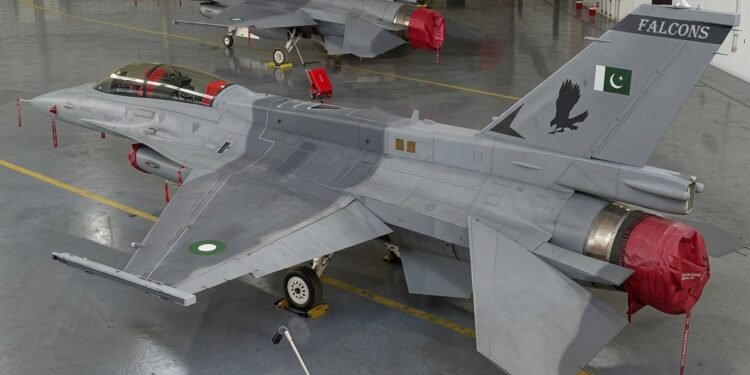
For Pakistan, the development represents another step in the ongoing modernization and sustainment of its F-16 fleet. The Pakistan Air Force continues to operate a mix of F-16 variants that remain among its most capable combat aircraft, particularly for precision strike, air defense, and multirole operations. The latest contract does not involve the delivery of new aircraft but focuses on radar support, maintenance expertise, and technical assistance designed to keep existing fleets combat-ready.
The contract follows a separate U.S. approval announced in late 2025 involving a proposed $686 million support and upgrade package for Pakistan’s F-16 fleet. That package included Link-16 tactical data systems, secure communications equipment, avionics improvements, navigation upgrades, training, software support, and logistics assistance aimed at extending the aircraft’s operational effectiveness well into the next decade.
U.S. officials have previously stated that such programs are intended to enhance interoperability between partner nations and American forces while supporting counterterrorism and contingency operations. The modernization effort is also expected to help extend the service life of Pakistan’s F-16 fleet toward 2040 through upgrades to mission systems, communications, and safety-related equipment.
The latest radar-support contract underscores Washington’s continued commitment to sustaining F-16 fleets across allied and partner air forces. As many operators seek to keep their aircraft relevant against evolving threats, long-term support agreements such as this one play a critical role in ensuring mission readiness and maintaining combat capability.
For Pakistan, the agreement reinforces the importance of the F-16 within its broader fighter inventory. Although the country has diversified its combat aircraft fleet in recent years, the F-16 remains a key component of its airpower strategy, benefiting from periodic upgrades and technical support programs that help preserve its operational effectiveness in an increasingly complex security environment.