Pakistan has publicly presented what it describes as evidence supporting its claims that Pakistan Air Force (PAF) fighter pilots shot down multiple Indian Air Force (IAF) combat aircraft—including Rafale and Su-30MKI fighters—during the aerial confrontation that took place in May 2025.
The material, showcased during official military briefings and presentations, reportedly includes radar tracks, mission data, electronic signatures, and other operational information that Pakistani officials say corroborates their account of the engagement. Islamabad maintains that the evidence demonstrates the effectiveness of its integrated air combat network and modern beyond-visual-range (BVR) engagement capabilities.
The aerial clash, one of the largest between the two nuclear-armed neighbors in decades, followed a period of heightened military tensions. Both countries launched military operations and exchanged missile and drone strikes before a ceasefire brought active hostilities to an end.
Pakistan Details Its Account
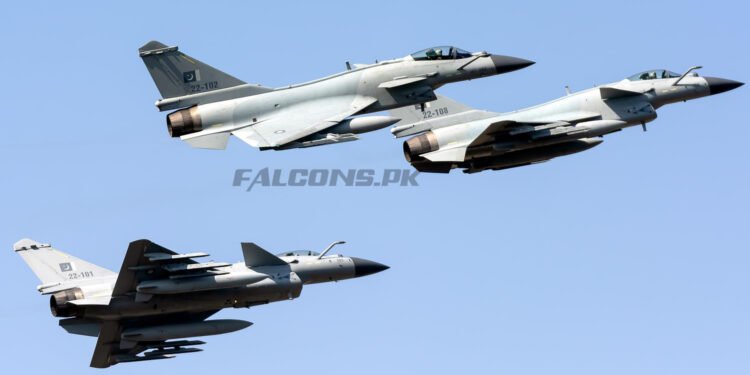
According to Pakistani military officials, the engagement involved coordinated operations between airborne early warning aircraft, ground-based radar systems, electronic warfare assets, and frontline fighters including the J-10C and JF-17 Block III.
Pakistan says its network-centric approach enabled pilots to detect, track, and engage multiple airborne targets at long range while maintaining situational awareness across the battlespace. Officials argue that the operation highlighted the effectiveness of integrated command-and-control systems in modern air warfare.
The evidence presented reportedly includes engagement timelines, radar recordings, and electronic data that Pakistan says support its claims regarding the aircraft involved.
Indian Position
India has rejected Pakistan’s version of events and has not acknowledged the loss of the number or types of aircraft claimed by Islamabad. Indian officials have maintained that their military operations achieved their intended objectives while declining to confirm many of the specific claims circulating after the confrontation.
Because both sides have released differing accounts, several aspects of the engagement remain the subject of debate among defense analysts and independent observers.
A Focus on Beyond-Visual-Range Combat
Military experts note that the confrontation underscored the growing importance of beyond-visual-range air combat, sensor fusion, electronic warfare, and integrated air-defense networks. Modern aerial engagements increasingly depend on information superiority, secure data links, and advanced missile technology rather than traditional close-range dogfighting alone.
The encounter has drawn international attention because it may offer valuable operational lessons on the employment of advanced fighter aircraft, airborne surveillance platforms, and long-range air-to-air missiles in a high-threat environment.
Continuing Analysis
Defense analysts continue to study the available information released by both countries. While Pakistan maintains that its evidence validates its operational claims, independent verification of all aspects of the engagement remains limited due to the classified nature of military data and the absence of comprehensive public disclosure from both sides.
The episode nevertheless represents one of the most closely examined modern air combat encounters in recent years and continues to influence discussions on airpower, electronic warfare, integrated air defense, and future fighter aircraft procurement across the region.