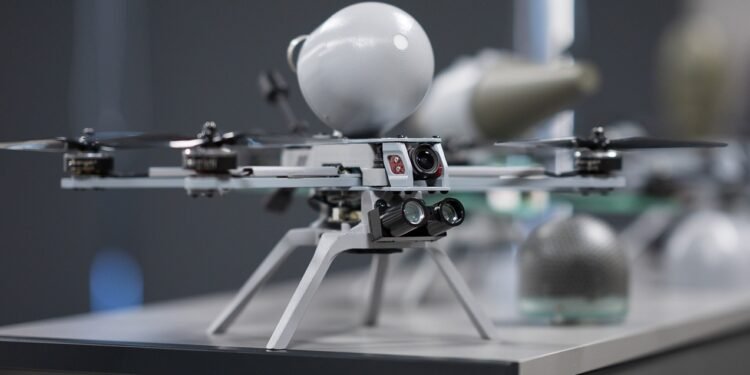
Pakistan is set to acquire 100,000 Turkish-made MERKÜT FPV kamikaze drones under a major three-year defence agreement with Türkiye’s Pasifik Teknoloji, marking a significant expansion of Pakistan’s unmanned warfare capabilities.
The Turkish defence technology company has officially identified Pakistan as the buyer in a disclosure to Türkiye’s Public Disclosure Platform (KAP). The agreement was signed on September 18, 2026, with Pakistan’s National Radio and Telecommunication Corporation (NRTC).
Turkey's Pasifik Teknoloji said Pakistan's NRTC signed a three-year contract for 100,000 MERKÜT FPV kamikaze drones plus unmanned helicopters and ground systems. pic.twitter.com/6CNDzIQ1bL
— PAF Falcons (@PAFFalconsPK) November 13, 2026
The deal covers the supply, distribution, local assembly and production of more than 100,000 unmanned systems, making it one of the largest publicly disclosed FPV drone procurement agreements involving Pakistan.
MERKÜT: The main component of Pakistan’s acquisition
The MERKÜT is a first-person-view (FPV) kamikaze drone developed within the Pasifik Teknoloji group through SAVX Teknoloji. FPV drones have become increasingly important in modern warfare because they offer relatively inexpensive, expendable platforms for precision attacks against battlefield targets.
Their growing importance has been demonstrated during the Russia-Ukraine war, where small FPV platforms have become an important component of battlefield operations. For Pakistan, acquiring 100,000 systems could support the development of a much larger distributed unmanned warfare capability.
Local production in Pakistan
One of the most important aspects of the agreement is its local production component.
The agreement between Pasifik Teknoloji and NRTC covers:
– Sales and distribution of Turkish unmanned systems.
– Local assembly and production in Pakistan.
– Industrial cooperation and technology-related collaboration.
The three-year agreement is expected to enter its production and delivery phase in the near future. However, the companies have not disclosed how many systems will be manufactured locally, what components will be transferred, or the precise division of production between Türkiye and Pakistan.
Strategic implications for Pakistan
The acquisition reflects Pakistan’s growing interest in mass-produced, relatively inexpensive unmanned systems. Traditional combat aircraft and sophisticated guided missiles remain important, but modern conflicts have demonstrated that large numbers of affordable drones can provide additional battlefield capabilities.
The acquisition could offer several potential advantages:
1. Mass deployment: A large inventory of FPV drones could support distributed unmanned operations.
2. Local manufacturing: Domestic assembly and production could reduce dependence on foreign suppliers over time.
3. Industrial cooperation: The agreement could strengthen Pakistan-Türkiye defence technology cooperation.
4. Unmanned warfare development: The additional helicopters and tactical kamikaze systems could diversify Pakistan’s unmanned systems inventory.
Nevertheless, the actual operational impact will depend on delivery schedules, training, production capacity, communications infrastructure and integration with existing military systems.
Pakistan’s agreement with Pasifik Teknoloji represents a significant development in the country’s unmanned warfare ambitions. The scale of the MERKÜT acquisition highlights the growing importance of mass-produced FPV drones in modern military planning. More importantly, the inclusion of local assembly and production could provide Pakistan with an opportunity to develop its domestic unmanned systems manufacturing capacity.
If implemented successfully, the agreement could become an important milestone in Pakistan-Türkiye defence industrial cooperation.